Click to view the most recent REAP eBulletin, sent to subscribers today.

Topics included are:

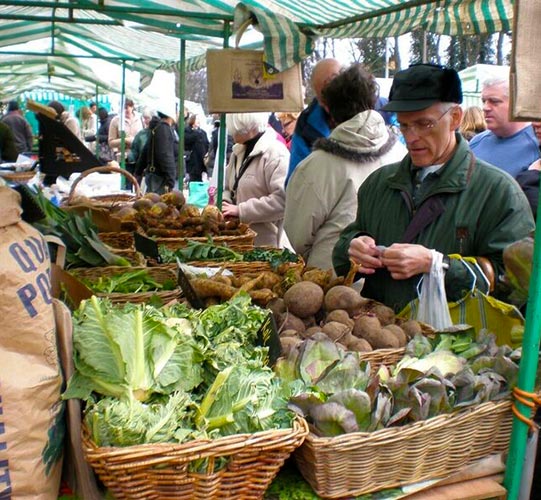
  • Oakwood Farmers’ Market (19th May)
  • REAP Energy, Gardening and Transport Group
  • Events in Roundhay Park in May
  • OverWorlds and UnderWorlds (19-21st May)
  • Green Film Festival (19-21st May)
  • Roundhay Live 2012
  • Local Towns, Local Food: a conference
  • Wild Food Walks
  • WrapUp scheme to save on your fuel bills

Subscribe to the eBulletin here.

 Number Group (A) & (B)
1 I.23 How the UK institutional, democratic and financial systems need to be adapted or amended to bring about large scale investment in low carbon energy infrastructure?
2 S.12 What is the role of culture change in adoption of carbon reducing processes, systems, behaviours and activities?
3 S.18 How best to engage with people and organisations to motivate them to make lifestyle changes (that result in reduced energy consumption)?
4 S.11 How do we develop new forms of governance to enable us to do things that we can’t do currently (e.g. bridge knowledge – action gap)
5 E.13 To what extent does demand reduction require cultural change, rather than individual behavioural change?
6 E.1 How can barriers to investing in energy use reducing processes and practices be overcome?

Paul Allen, Centre for Alternative Technology (CAT) – 6.03.2012

The whole lecture provided a brief run through of the history of the world and energy production and consumption. In the beginning, the sun, producing 1kw of energy for every sq m and an assumption that the world has locked up 4.5bn years of solar energy.

The impact of fossil fuels, oil usage and application – the car industry impact on design of communities. Areas of the world with greater affluence/ energy consumption experienced economic growth which does not equate to the growth in happiness…… the assumption being that the more energy intensive communities = experience of increased isolation, the highest use of Prozac. Prompts the question  ‘Can we imagine a positive future?’

Hence, the assembly of a positive vision, led by CAT, based on the political realism of now and the physical reality of 2030.

20% of countries create 80% of the problem. In the UK, the peak in discovery of oil was in 2005. The peak in bringing it to market is not known.

The UK is signed up to reduce carbon emissions by 80% by 2050 (the baseline year being 1990/91)

Key concepts used – power down (demand) and power up (use of renewables).

Ideas

To secure investment in renewable through energy bonds – investment is a front end cost  which would provide revenues for the future  and the premise made was that the returns are predictable. More predictable than future gas prices.

Smart grid  in the UK and an EU super grid.

Land use for energy production is critical, with implications for agriculture and impacts on rural life.

Wind – Increase off shore capacity and storage.

Tidal power – technology not fully tested but will require and estimated £400bn investment.

How do we make these changes? To develop a community of practice – there was a Parliamentary thrust  – is that still in pace following the departure of Lembit Opec?

There is a big cultural challenge … as to a campaign for a positive future!


The full report is available at www.zerocarbonbritain.org or available in printed copy. I have one hard copy of the key points

Interesting website from Winchester:

http://www.winacc.org.uk/publications-winacc)

Community Renewables workshop

No  longer a cottage industry – need to think much  bigger. These need to be a hybrid between community initiative and commercial enterprises ( eg a commercial enterprise giving one of a number of wind turbines to the community – with them  using the rest commercially).

“ The Rough  Guide to Community  Energy” is downloadable from the  Guardian

http://www.guardian.co.uk/environment/2012/jan/06/free-book-guide-community-energy

Recycling bags workshop

An idea  for a national scheme to have barcoded tags on reusable bags – each  time a bag was sued money would go to a local  community group ( which could be  REAP). This is in the early stages of development.

Links with academics workshop

Evaloc is researching the effect of low carbon community inittaives but the results won’t be out for a while

www.evaloc.org.uk

I spoke to someone after the session who  mentioned two academics at  Leeds  who  might be interested in collaborations

Paul Chatterton runs an activism  and social  change  Masters, and  Jane  Middelmass ( is this the person  Nigel is already linking to?)

Project  Dirt

We all listened to this presentation – this website might become a national one in the future.

http://projectdirt.com/ – and  could allow us  to   let people know of events as part of a network of  like minded groups in an area.

Overall Comment

The overall  thing for me  from the  Conference was to ask  why Sheffield and  Manchester apparently both have lively networks of a range of locally based groups but  Leeds doesn’t.


Workshop on homes and energy efficiency

Delivered by Low Carbon West Oxford (LCWO) and Muswell Hill

LCWO 

  • 1600 h’holds –terraces, average deprivation, young families
  • Plus Industrial estate
  • Local Flooding –issue that focused minds


Low Carbon Living Programme

  • Aims –to encourage significant reductions in CO2
  • To increase carbon consciousness

Recruitment of participants to the programme

  • Accessible to all – regardless of time and available resources (eg made grants for babysitters)
  • Proactive recruitment –leafleting and door knocking
  • Multiple messages –     
  • fuel savings
  • Save money
  • Carbon reduction
  • Community action (probably most important)

Programme has 3 legs to it –measuring, goal setting, support

Measuring

  • Leant OWL and eco-eye mini realtime display monitors
  • All participants get loan of monitor
  • Encourage monthly readings –I measure
  • Assess how whole lifestyle affects carbon use –Quicksilver


Goal Setting

  • Action plans (vvg) and pledge postcards
  • NEVER tell people what to do
  • Participants set own goals


Support

  • Carbon-busting sessions (participants invited but also open to others)  on Lighting and appliances, Heating and insulation, Travel,  Food and cooking, Stuff, Green energy
  • Information on grants available
  • £100 grant from LCWO
  • Peer to peer support –important to be part of a group sharing tips etc (nb carbon conversations material was recommended)
  • Regular communication


Progress to date

In year 1 over 100 households reduced their carbon by over 2 tonnes

Lessons –           

  • focus on practical
  • Balance detail with principles
  • Local trusted source of information
  • Work with friend and neighbours
  • Be flexible level of involvement and choice of actions is up to participants
  • Positive and guilt free and fun( guilt free is part of agreed ‘rules’)
  • Enthusiasm of those who make big reductions can be tapped into

Challenges -      

  • Improving conversion rate of interest to participation
  • Improving completion rates
  • Tailoring support for tenants in private rented and social housing
  • Engaging those with less time/motivation
  • Improvement of technical support
  • Time intensive to deliver

Muswell Hill

4000 households, loosely knit community, families/retired, time poor, affluent (therefore higher emissions)

Objectives

  • Work with limited number of householders to reduce emissions
  • Increase general awareness of wasting energy and micro-generation
  • Make it easy for householders to act
  • Work with local businesses

2 Key programmes

100 homes programme and Low carbon buying group

100 homes carbon reduction programme

  • Recruited at summer fairs and local group events over period of 6 months
  • Baseline of carbon footprint and q’naire on measures already in place
  • Tailored advice to householders
  • Help householders find trusted suppliers (recommended by local user)
  • DIY training events for simple measures eg draft proofing
  • Training events on how to reduce carbon footprint
  • Discounts on more expensive measures through bulk buying

Results 1 year on

  • Overall reduction from programme by 16%
  • Nb 50 people signed up –down to 27 by end of year

Low carbon buying group

  • Solar renewables, boilers etc
  • Thorough check of potential suppliers
  • Must sign up to group to be part of it
  • Small commission to group
  • 38 installs by 12/11

Lessons from both programmes

  • Volunteer time commitment is huge (vols move on etc)
  • Converting interest into actual participation (160 registered, 50 did baseline, 27 completed

Challenges

  • Decide whether indepth programme or broader reach
  • Tailor approaches to the community
  • Time required and retaining volunteers
  • Recruitment conversion retention
  • Providing technical advice


Messages from the LCCN conference

  • LCCN Chair Chris Church stressed the importance of grass roots local action at a time when public concern is in a trough and there is scant evidence of political concern or commitment
  • Very impressive results achieved by Low Carbon Oxford.  Interestingly Oxford CC’s goal is also a 40% reduction in carbon emissions by 2020
  • Oxford has 67 active LCC groups and very effective collaboration between the groups. Oxford CC, business, commercial and social enterprise partners which taken together is building a grip on the city’s footprint
  • Stressed the importance of measuring and monitoring, and how not to be intimidated by the “big boys” eg amazing how little the top brass of BMW knew about the issues
  • Also stressed  the importance of building on the city’s historic and industrial heritage
  • Message from The Co-operative Group – resist “heroic amateurism” and embrace partnerships with the commercial sector even if it feels uncomfortable
  • NB keep an eye out for news from The Co-operative Group – they are preparing a Manifesto for Ministers

Workshop on Community Action at city/county/regional levels.  Community Action Groups Oxfordshire – a funded organisation – provides support to 38 local groups on tools to effect change, finance, insurance, publicity, training, websites etc. Each group follows a 6-stage model:

  • 1. “Kitchen table stage”
  • 2. Going public with widening interest and support
  • 3. Enthusiastic action with activity under way NB groups can stop here or push on…
  • 4. Planning a large scale/flagship project
  • 5. Obtaining funding
  • 6. Achieving financial stability/long term sustainability
  • NB REAP is probably at level 3? (Low Carbon West Oxford is at level 6


  • Presentation from Communities Cutting Carbon  – Dr Andrew Reeves – Leicestershire and Rutland with De Montford University
  • Similar model to REAP but funded (although about to lose support)
  • Acts as a local support hub; e-newsletter to 250 people monthly; uses FB and Twitter; produces case studies; held a green fair; runs community allotments; produced a local green directory (see www.ruralcc.org.uk/green-directory) with help from a volunteer intern; got a grant for a thermal imaging camera; holds networking events; visits to good practice sites; hold public meetings to spark activity
  • CONCLUSION – NEEDS A CORE OF COMMITTED VOLUNTEERS
  • Presentation from Peter Bulmer – Cheshire and Warrington Sustainable Communities (includes Ashton Hayes in a network of 40+ groups
  • Messages: know your community – where is the expertise? Don’t be afraid of media eg local radio; engage with univs – get students to help; engage with trade unions
  • OVERALL – need to be part of a network of local communities; get your LA on side – Oxford CC is ready to evangelise to other Local Authorities (and this apparently is very rare…)
  • Workshop on Community Buying – opportunity to negotiate installations with referral fee going to the local group
  • Understand the opportunities to be offered via the Green Deal???
  • But remember – people may benefit from discounts but they will not necessarily use less fuel as a result. Behaviour change is the key…..
  • Workshop  on Community and Local Authority partnerships. Clearly works very positively between Oxford CC and Low Carbon West Oxford.  First cohort of 36 households reduced their emissions by 3.6 tonnes per household and this is being maintained. Oxford CC has adopted the programme for other communities. Why successful? Because people in the communities and at the city council have worked literally FOR YEARS to make it happen; lots of continuity of personnel; CATALYTIC COUNCILLORS looking to see how they can help officers NB not always the norm – Oxford may have exceptional councillors
  • Muswell Hill network – signed people up by door knocking by known community reps
  • Stressed the importance of using well known, active local people; the Council can add weight/branding/funding/gravitas?
  • Much use made of “pledges” and sharing personal stories


CONCLUSIONS FOR REAP:


West Oxford et al showed how local groups can progress bottom up and become local authority partners. We have the opposite situation in Leeds where there is no clear network of local groups but the city council is looking for partners in a more top-down initiative? (ie interest in mini-Stern and the How to be a Sustainable City paper)


Interestingly both cities have the same goal ie 40% reduction by 2020.


There is a role for local groups as the money gets tight and local authorities are forced to recognise that other bodies can deliver public services.


But it would be great to be part of a network – we need to research the ones which apparently exist in Manchester and Sheffield?

  • Helping to solve the climate & economic crisis
  • Fighting for a million new jobs
  • fighting the threat of catastrophic climate change
Coming to Leeds on Tuesday 15 May.

Public Meeting at Leeds Met Uni Broadcasting Place Building. Speaker is Martin Empson (Campaign against climate change Trade Union group) and others invited from local campaigns.

Start at 6:30 pm
Room AG2, Broadcasting Place
Leeds Metropolitan University City Campus
Woodhouse Lane LS2 9EN

Following the example of the Trans Africa Climate Caravan of Hope which carried the message of Climate Justice to the UN Climate talks in Durban, the Campaign against Climate Change Trade Union group has organised a Climate Jobs Caravan in Britain. The caravan will highlight how creating climate jobs can help us tackle the twin crises of the economy & climate change.

The economic crisis is getting worse for many people. One in five young people are out of work. We also face the threat of climate change which could threaten the future lives of our children and grandchildren.

This meeting (and the Climate Jobs Caravan) will argue that we can start to tackle these problems now by making the Government create a million new climate jobs.

These would deal with introduction of renewable energy, achieving greater energy efficiency in our buildings & transport systems, expanding public transport, insulating our homes, & training people in green skills.

All of this can be done with a fraction of the amount of money that Government has invested in keeping banks afloat.

The Climate Jobs caravan is backed by PCS, TSSA, UCU & CWU national unions. It is a 2000 mile tour of Britain to promote the call for a Million New Climate Jobs.

The caravan also intends to raise public discussion of how jobs lost in our area can be replace through creation of new industries & services that are needed to ensure a environmentally sustainable future.

For more details and if you want to get involved:
Telephone: 020 7833 931
Sign the petition for a Million New Climate Jobs (and get more information)
http://www.climate-changejobs.org/petition

Click to view the most recent REAP eBulletin, sent to subscribers today.

Topics included are:

  • Oakwood Farmers’ Market – 21st April
  • Green Day
  • REAP Gardening Group
  • Events in Roundhay Park in April
  • Treasures Revealed
  • Start beekeeping with Leeds Beekeepers’ Association
  • Olympic Events in Leeds
  • Roundhay Live 2012
  • EcoKids textile recycling

Subscribe to the eBulletin here.

REAP’s Energy Group has organised a Green Day on 28 April 2012 to which all are invited between 10.00am and 3.00pm.

The day will be an open doors event to allow you to talk to Roundhay residents who have installed insulation, energy saving devices and green energy generation such as solar PV.

You will be able to visit up to ten homes across Roundhay, see what local people have done and discuss with them the benefits and costs.

There will be examples of  • Solar PV  • Solar Thermal  • Draught proofing  • Air source heat pumps  • Biomass Boilers  • Insulation  • Sustainable Living  • Wood burning stoves

To take part, turn up and register at 37 The Drive, Roundhay LS8 1JQ after 10.00am.  You will be given a map to guide you to the households that are taking part, and details of the measures on view at each house.

Click to view the most recent REAP eBulletin, sent to subscribers today.

Topics included are:

  • Oakwood Farmers’ Market
  • REAP Gardening Group
  • REAP Transport Group
  • GREEN HOUSES wanted for Green Day
  • Implications of the Health and Social Care Bill
  • Roundhay parkrun beginners’ run
  • Treasures Revealed
  • Events in Roundhay Park in March
  • Roundhay Park skate park plans
  • Oakwood Library Children’s event
  • Start beekeeping with Leeds Beekeepers’ Association
  • Roundhay Live 2012

Subscribe to the eBulletin here.

Welcome to REAP’s first membership survey. We are keen to hear from as many of our members as possible.

The attached letter and questionnaire are being delivered to REAP members over the next few days.

However, you can download the letter here and the questionnaire here, save them to your computer, complete the questionnaire (it’s a Word document), and email it back to info@REAP-leeds.org.uk by the deadline of 17 February.

Thanks to Leeds University student Clare Nutter who is organising it on our behalf. Summarised results which will appear on the website in early May.

On 28 April 2012, REAP is organising a “Green Day”.

The Green Day will be a day to encourage people in the Roundhay area to improve the insulation of their homes and install renewable technologies, thereby reducing their carbon footprints.

We envisage that on the Green Day, Roundhay residents will be able to visit other people’s homes who have already had solar PV, solar heating, biomass boilers, insulation (roof, floor, cavity wall, solid wall etc), ground source heat pumps, wood burning stoves or other environmentally friendly products installed and ask them about the cost, savings and any issues associated with the technologies.

REAP is now calling for local residents to volunteer to welcome local residents into their homes on Green Day to talk to them about the measures that they have taken.

If you have installed any of the measures listed above, and would be willing to take part, please download the information letter and short questionnaire HERE, and return the completed questionnaire to REAP by email to greenday@reap-leeds.org.uk.